Soft washing starts with the deposit, not a lower pressure number
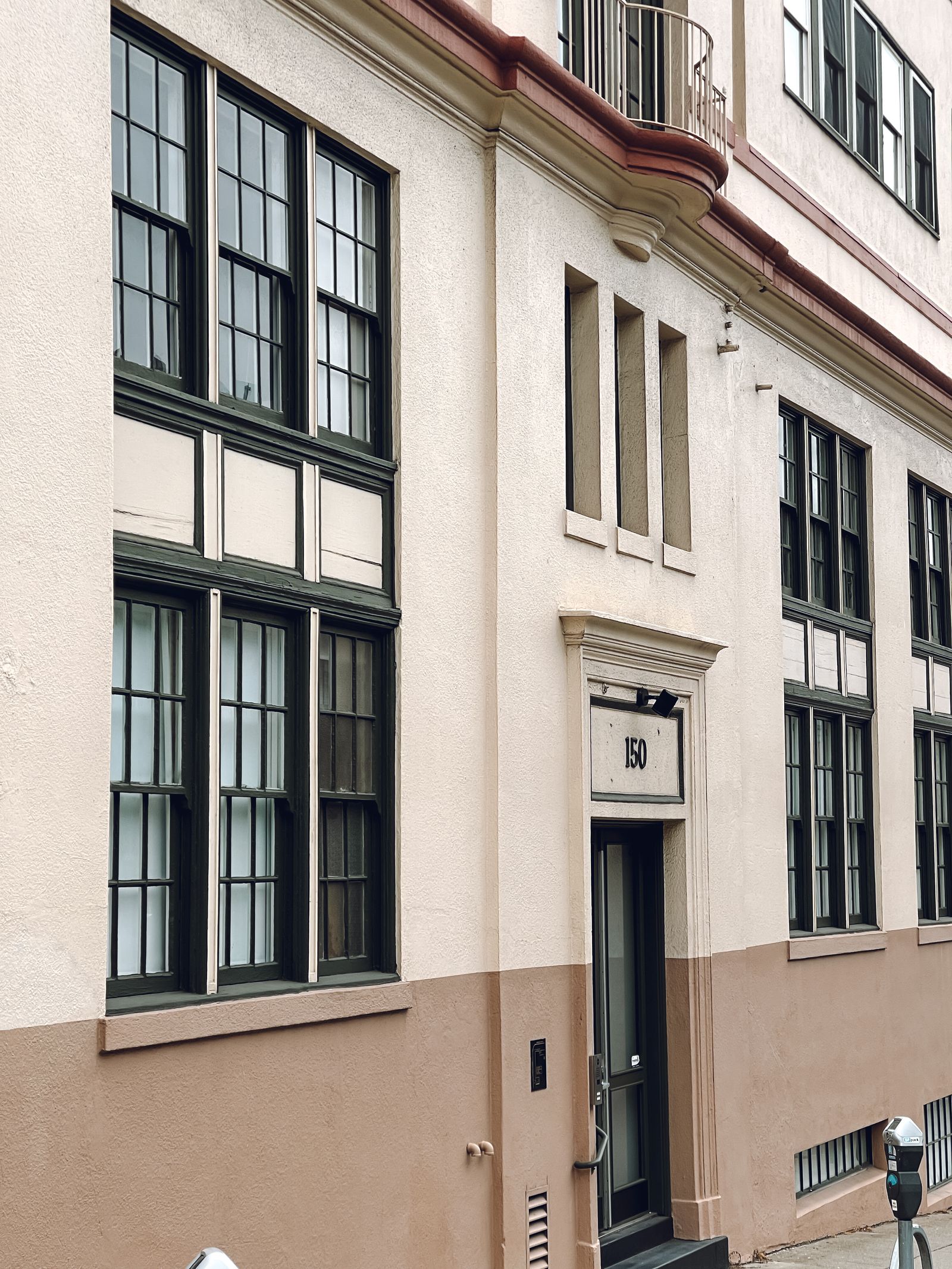
Soft washing is often considered for algae, mildew, pollen, bird residue, and atmospheric film on tested brick, painted concrete, compatible stucco, EIFS, or similar zones. The lower-impact approach can reduce the temptation to use force against a porous or aged facade, but it still requires material knowledge. Chemistry, concentration, dwell time, temperature, wind, sunlight, rinsing, plant protection, glazing protection, and open joints all matter. On a Congress Street storefront or an older West End building, a test area can show whether the original mortar, later repairs, and salt exposure will respond as expected.
Soft washing is not a promise to erase every visible mark. Portland's lower walls can carry road splash, sand, deicing salt, soot, rust, mineral deposits, and runoff from ledges. Those conditions may need controlled rinsing, specialty treatment, contact detail, or restoration. A proposal should define the intended outcome: a recurring organic-growth maintenance clean, an atmospheric-film improvement, a winter-residue reset, or a separate restoration project. It should also say what may remain and why, especially on historic details where appearance improvement cannot justify material loss.
Pressure washing belongs in selected durable zones
Pressure washing can have a role on sound concrete sidewalks, loading aprons, garage floors, service yards, parking structures, dumpster pads, and other durable hardscape after the operator reviews force, distance, flow, drainage, adjacent finishes, and public activity. It may also be considered on a tested facade material when the building condition and finish support it. Equipment size is not a method recommendation. A powerful machine can erode mortar, scar soft stone, strip paint, disturb a brick face, drive water behind a coating, or spread contaminated runoff farther than intended.
Portland's mixed streetscape makes the distinction important. A cleanable concrete loading area on Riverside Street is not the same decision as a painted cornice over a busy Fore Street sidewalk. A lower wall beside I-295 may need salt and traffic-film treatment, while an upper wall carries pollen and rain streaks. Ask the contractor where pressure is proposed, why the substrate can tolerate it, what test or protection is required, and how the dry finish will be checked. A scoped hybrid is usually more credible than one pressure setting across the whole property.
Coastal exposure and winter weather change the comparison
Casco Bay air, coastal wind, fog, rain, road spray, and winter deicing create different resoiling patterns on Portland properties. A hotel or restaurant near the Old Port may show salt-laden film on glass, rails, and lower cladding. A warehouse near the Fore River may see wind-driven residue and larger open work areas. A property in East Bayside may have tight drainage and active public movement. A suburban commercial building near the Maine Mall may have more staging room but still concentrate salt and slush around parking, ramps, curbs, and entrances.
The Portland Jetport climate normals show a meaningful winter freeze-thaw burden, substantial annual precipitation, and regular snowfall. Cold masonry, thawing snowbanks, shaded sidewalks, and meltwater can make a technically clean surface unsafe or visually uneven. Wind changes spray and hose handling; rain changes runoff; a cold surface may not dry when the owner expects. The scope should state stop conditions, rescheduling rules, and the point at which a dry review occurs. A method that works on a calm July morning may be a poor choice during a February thaw or an exposed coastal gust.
Compare drone assistance with lifts and contact detail
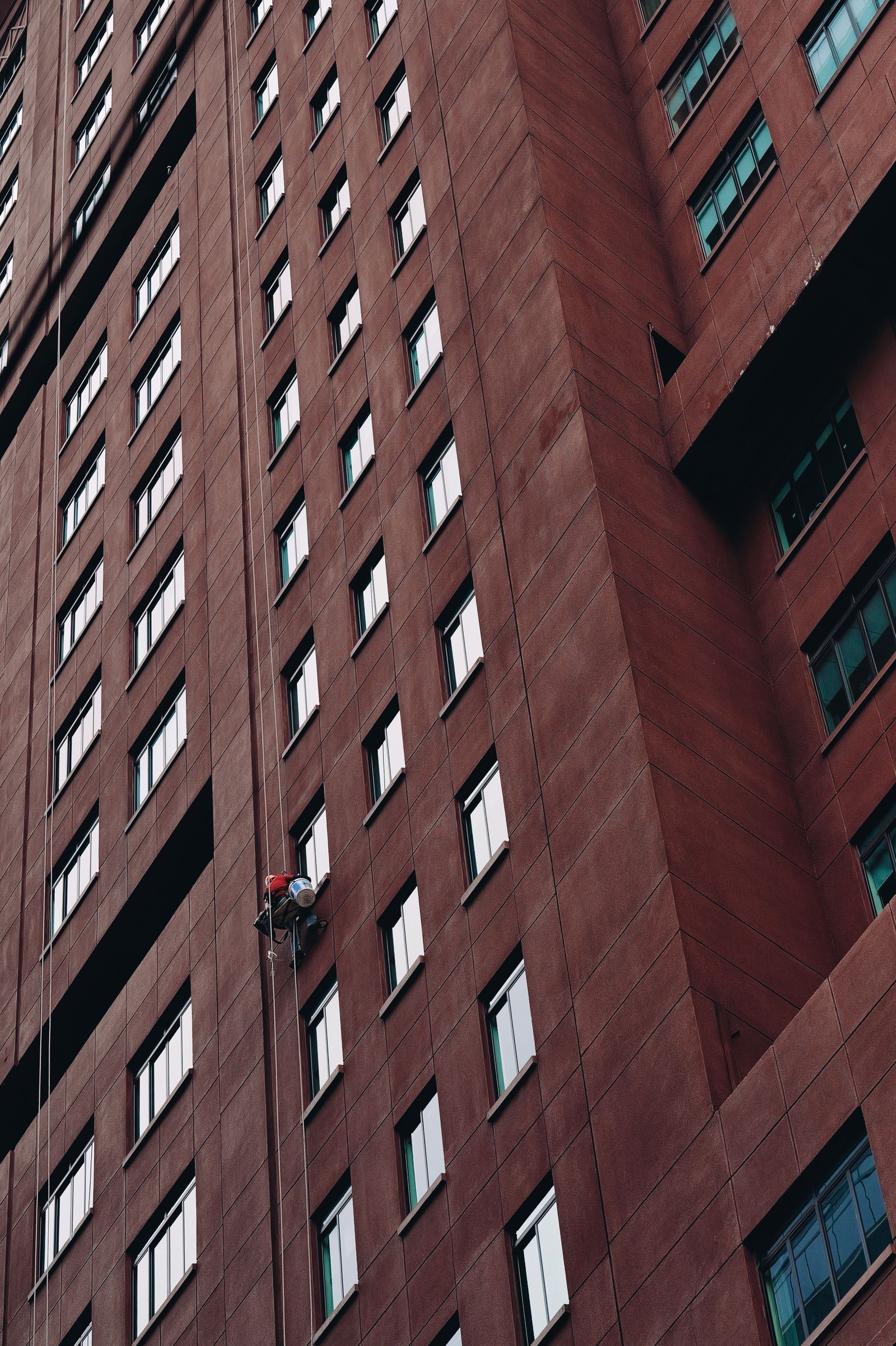
Aerial assistance may reduce lift staging for broad, suitable upper wall, parapet, ledge, or rinse zones. It can be attractive where a property has height, setback, and a clear controlled ground area. It becomes less attractive around tight Old Port blocks, overhead utilities, balconies, active restaurant seating, airport or heliport considerations, rail movement, or a facade that needs close inspection and hand finishing. Portland International Jetport is a significant local airspace consideration, so a commercial drone plan needs address-level review rather than a blanket assumption that a city property is flyable.
A drone cannot squeegee glass, brush a recess, scrape a bonded mineral deposit, repair a joint, feel loose material, or detail a sign and canopy at arm's length. A lift, water-fed pole, hand crew, or hybrid sequence can still be needed at storefronts, cornices, windows, entries, and lower salt-marked zones. Ask for a map of aerial, lift, pole, and hand-detail areas. A useful comparison describes what each method can accomplish on the actual elevation and what it cannot, instead of making access technology the centerpiece of the quote.
Compare methods by people, drainage, and protection
The method decision is also an operations decision. A Portland plan should identify occupied entrances, accessible routes, outdoor dining, delivery windows, parked vehicles, basement doors, mechanical intakes, plantings, curb cuts, and public sidewalk limits. A property near Commercial Street may need a smaller, more closely managed work zone than a set-back industrial site. Hotels, hospitals, offices, schools, and retailers need a contact who can pause the work. Pressure, chemistry, spray, and hoses all create different controls, and every method still needs a clear public-protection plan.
Water should be followed from the wall to its receiving point. Sloped streets, curb inlets, parking-lot drains, garage ramps, planted courtyards, and connections toward Casco Bay can make uncontrolled discharge a property and environmental problem. The owner and contractor should identify products, expected soil load, containment or diversion, recovery or disposal, and any city permissions required for sidewalk or street occupancy. A quote that only lists square footage and equipment does not answer the risk questions that make a commercial project workable.
- Require a material-specific method and expected finish for each elevation.
- Separate facade maintenance from restoration, repairs, glass detailing, and coatings.
- Review salt, freeze-thaw, wind, public routes, airspace, water access, and discharge controls.
- Request test-panel results and closeout photos before approving a full-building sequence.
Use a mixed-method scope when the building calls for it
A Portland commercial property may need compatible soft washing on upper facade zones, controlled pressure on sound concrete, and pole, lift, rinse, or hand work around lower deposits and architectural details. A historic elevation may need preservation-oriented restoration as a separate scope. That is not indecision; it is an accurate response to a building assembled from different materials and exposed to different conditions. A test panel gives the owner a chance to evaluate appearance, runoff behavior, and protection before the whole project is scheduled.
When requesting recommendations, divide the property into upper walls, windows, doors, ledges, canopies, cornices, loading areas, garage ramps, sidewalks, and sensitive landscape or mechanical zones. Ask how the sequence will work around tenants, guests, patients, students, deliveries, and public movement. A good proposal will explain where soft washing is expected to work, where pressure is limited or excluded, where aerial assistance helps, how weather affects the date, and what is documented at handback.
Get a Portland method recommendation tied to your property
Soft washing may fit selected organic growth and atmospheric film, while controlled pressure may fit sound hardscape and other durable zones. Neither method should be selected from a generic promise or a machine specification. The recommendation should follow Portland's substrate, mortar, coating, stain, height, coastal exposure, salt, freeze-thaw, wind, drainage, access, and intended finish. A hybrid plan and a test area can reveal more than a one-line claim that the building is safe for any method.
Drone Building Cleaners can review Portland offices, hotels, restaurants, healthcare properties, university and school buildings, historic commercial blocks, retail centers, manufacturing sites, warehouses, garages, apartments, campuses, and waterfront or transportation-facing exteriors. We can discuss facade washing, upper wetting and rinsing, ledges, parapets, canopies, recurring maintenance, and the areas that need contact work or another specialist. The recommendation stays centered on the property's materials and the customer's operating constraints.
For a quote, send the Portland address, target elevations, photos, approximate height, visible stains, known materials, operating hours, water access, drains, loading restrictions, and preferred timing. Include whether you are comparing a one-time clean with a recurring plan. We will identify the next practical review step and describe what can be cleaned, how it should be approached, and which conditions deserve separate repair or restoration attention.